
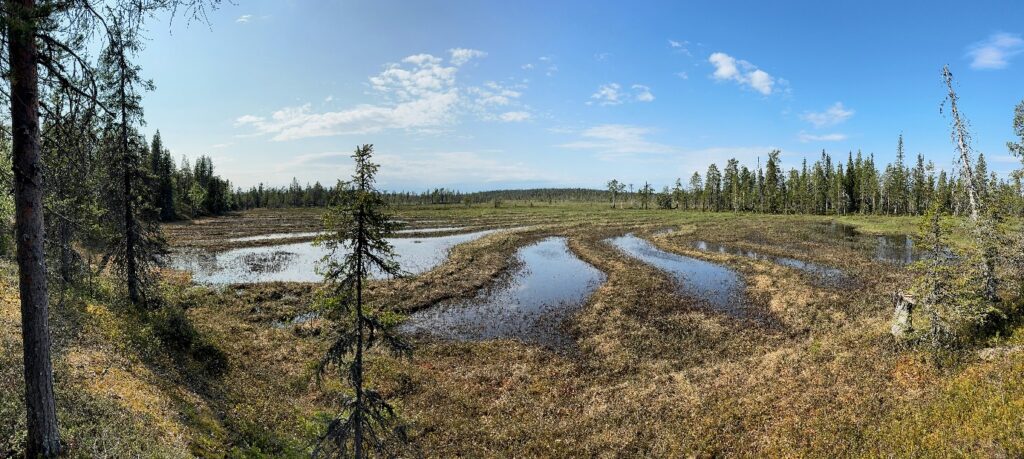
Figure 1. Wetland landscape, Topsakanaapa, Lapland, Finland. Photo by Harri P on Unsplash.
Walking through the countryside have you ever stepped off the path only to be confronted with an area of damp, soggy, muddy terrain that is too wet and unstable to step onto? Was that area called fen, marsh or bog? Most likely you turned around and sought firm ground to walk on. These muddy, wet, squelchy areas (Figure 1) are currently being utilised to help us combat worldwide problems with carbon emission and flooding. This nature-based approach has generated discussions between various groups utilising and protecting landscapes containing such spaces.
Here is the ongoing debate around ‘mud’ and viewpoints from three relevant professions:
- Ecologists who study the relationship between plant and animal communities today.
- Paleoenvironmentalists who study how climate and natural disasters have changed and influenced plant and animal relationships over thousands of years.
- Archaeologists who study how humans interact with their environment in the past.
Useful mud
Boggy places encourage the formation of a type of mud called peat. Peat is a build-up of layer upon layer of plant and animal remains that cannot rot down due to the permanent water coverage. These plants alongside the animal bodies naturally contain considerable amounts of carbon. The material within peat layers is often covered by mosses, which absorb water and continue to keep the peat layers wet, trapping all the carbon and stopping it from being released into the atmosphere. Additionally, mosses associated with peatland retain large amounts of water. Thus, mosses act as a barrier that slows water flow and are a reservoir that can release water back into surrounding fields during drier seasons. But if peat dries out, the trapped carbon releases into the atmosphere and adds to the worldwide rapid rise in carbon emissions, usually linked to fumes such as industrial processes.
Ecosystem, climate archive and chronicle of past human activity
While we might find it hard to traverse boggy peatland spaces, ecologists love peatland as it supports plant and animal communities not found anywhere else. Paleoenvironmentalists love peatland because peat that has built up over thousands of years can be investigated to identify plants, animals and the climate of the past. Archaeologists also love peatland as it has preserved some amazing human-made structures, crafted from natural materials, such as the wooden walkways assembled thousands of years ago in the large, wet peatlands of the Somerset levels, Southwest England, UK (read more: Sweet Track and other wooden trackways – Avalon Marshes).
Utilisation from past to present
Apart from building pathways, such as the trackways found in Somerset Levels (UK) and other peatland areas, humans have not ignored or avoided peatlands. Some were used to deposit offerings and occasionally peatlands were selected to sacrifice or punish humans, the so-called bog bodies that have been found in various countries (read more: The mystery of Europe’s most famous bog bodies | BBC Global).
Aside from these, over thousands of years people cut peat logs manually and utilised them as fuel for their home or small-scale production hearths. For centuries, peatlands were on the margins of human life, and the extraction of peat was a small scale process.
This changed over the last three hundred years, when within large areas of Northern Europe, peatlands were drained to gain land for grazing and crop production. Additionally, gardeners discovered that peat was a good medium for potting up plants or to add as a soil improver. Rather than continuing the slow process of cutting peat by hand, the increased demand and ability to employ machinery with the onset of the industrial revolution, aided in the efficient, fast, and large-scale drainage and extraction of peat from peatlands.
The problem with drying peat out
As a result, peatland areas were drying out. The loss of water and exposure to air meant that the layers upon layers of plant material began to rot and release the carbon trapped within them. Where once the mosses acted like sponges which stored water, slowed the water flow and could incrementally release this water during periods of drought, this sponge effect was extracted away.
None of the relevant professions liked this. Ecologists did not like it as it threatened the plant and animal communities adapted to the peatland environment. Paleoenvironmentalists and archaeologists did not like it either as the plant and animal material contained within the peat was degraded or taken away. This destroyed the chance of analysing the information about past climates and animal or plant organisms adapted to that area or how for centuries people had lived with and utilised peatlands sustainably.
The current ‘nature-based solution’ approach
More recently our priorities have changed. Governments are attempting to cut down on the release of carbon into the atmosphere and are looking for solutions to prevent flooding in villages, towns and cities. With that new focus our natural environment is being investigated and utilised to help. Peat has become one of those ‘nature-based’ solutions. The machines have moved in again (see Figure 2). This time not to extract and drain the peat, but to rewet drying peatland and to encourage new peat formation through planting out mosses.
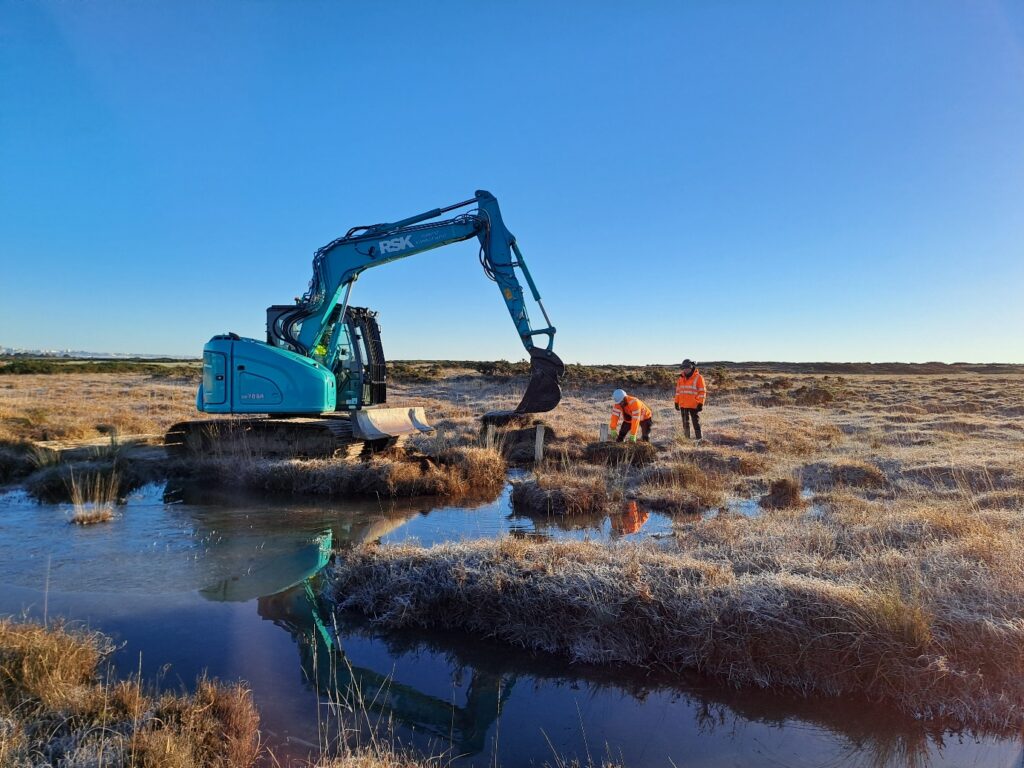
Figure 2. Tracked machinery used to create wetland spaces encouraging peat formation, Greenlands, Isle of Purbeck, UK. RSK excavator staking heather bales, 2023/24. Image used with permission from DCP-Dorset Catchment Partnership.
Problem or solutions?
Two landscapes, Somerset Levels and Isle of Purbeck, both situated in Southwestern England, UK, illustrate issues around peat restoration. On the one hand, within the Somerset Levels, where vast wetland and peatland spaces have existed for thousands of years, peat restoration aligns with its centuries old landscape composition. On the other hand, peat restoration and creation has been implemented within the Isle of Purbeck landscape. For thousands of years, the Isle of Purbeck area has been dominated by heathland that contained a few small patches of peat (read more: Dorset Peat Partnership Project).
Humans have shaped their environments and altered the landscape for a long time. In fact, the heathland landscapes of Northern Europe, often identified through their dark pink/purple flowering heather, are found on the Isle of Purbeck. This environment formed due to humans expanding their agricultural activities into areas where the soil was very poor in nutrients. Although crop production failed in heathlands, these areas continued to be used for animal grazing. Grazing kept the heathlands free of trees and allowed for special animal and plant communities to thrive. Ecologists love this. In the same way as peatlands, heathlands support their own unique plant and animal communities.
The debate
Within current discussions, some are questioning the creation of peatland in landscapes that have so far only displayed peat within marginal, patchy, and small spaces. Some ecologists want to encourage more areas where peat and its associated plant and animal communities can thrive. But, others see that this is encroaching on specialist plant communities found in environments such as the heathlands of the Isle of Purbeck.
Paleoenvironmentalists caution that conservationists often overlook landscape changes that have taken place over the last 300 years. This ignores what has happened in previous centuries. Paleoenvironmentalists point out that much older animal and plant data, linked to similar climatic conditions experienced today, should help with planning the right approach to nature-based solutions.
And, finally, some archaeologists welcome the idea of re-wetting areas to preserve human-made structures for future research but acknowledge that without more detailed investigation some of the mechanised peatland restorations are potentially destroying currently unknown traces of past human lives.
When you next find yourself on the edge of a soggy, wet, impassable bog landscape, take some time to ask yourself: do you agree with nature-based solutions? Do we want to restore these spaces where they have existed for thousands of years? Do we want to create new peatland areas where their carbon capture and water retention capabilities would be useful, but where their creation destroys other specialist plant and animal communities or future research analysis potential? Will we adopt the building of walkways to make the peatland landscapes more accessible? Trying to answer these questions can cause controversy and will continue to spark conversations.